
HR software development
for the modern workforce.
HRIS, ATS, performance, learning, and workforce-analytics platforms. Built for the distributed, contingent, multi-generational workforce that today's HR teams actually manage, not the org chart from 2015.
People data is trust made into a database.
HR software touches every employee at an organisation and stores some of the most sensitive data any system holds. Salary, performance, health accommodations, grievances, immigration status. The category's engineering has to combine consumer-grade UX (for the employee) with enterprise-grade rigour (for the HR team, the auditors, and the works council).
We've built HRIS cores, applicant tracking systems, learning platforms, performance tooling, and workforce-analytics products for HR-tech vendors and in-house people teams. Every engagement has a privacy and access review, and ships with the audit trail, retention policies, and role-based access the category demands.
Things we've shipped
in hr.
A sample of what we've built in this sector. We omit client names by default and share them under NDA when you want to dig into a specific engagement.
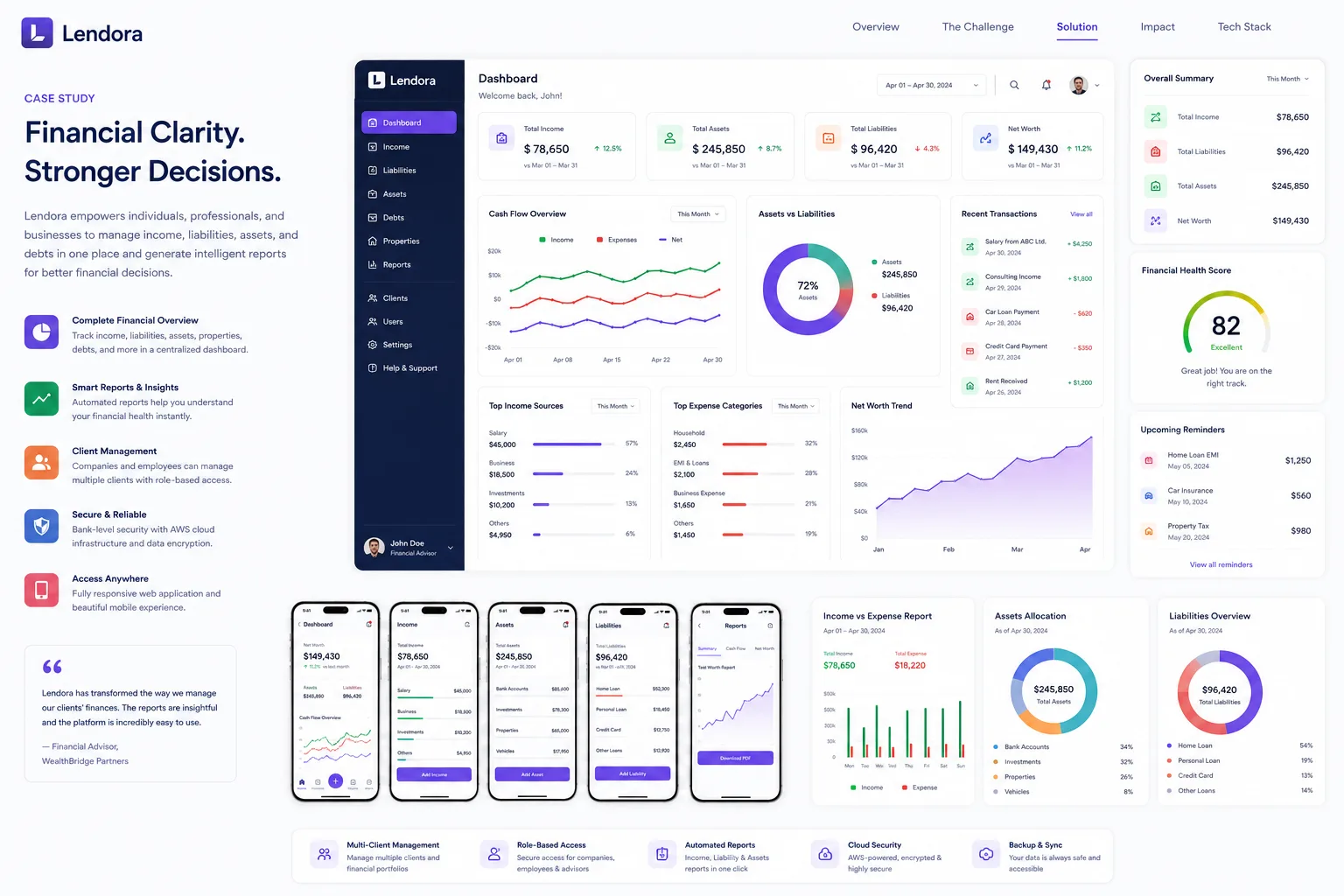 HR
HRLendora: staff rostering and appointments without the spreadsheet.
Staff and appointments are scheduled from one place instead of spreadsheets.
Django · AWS · Python · jQuery
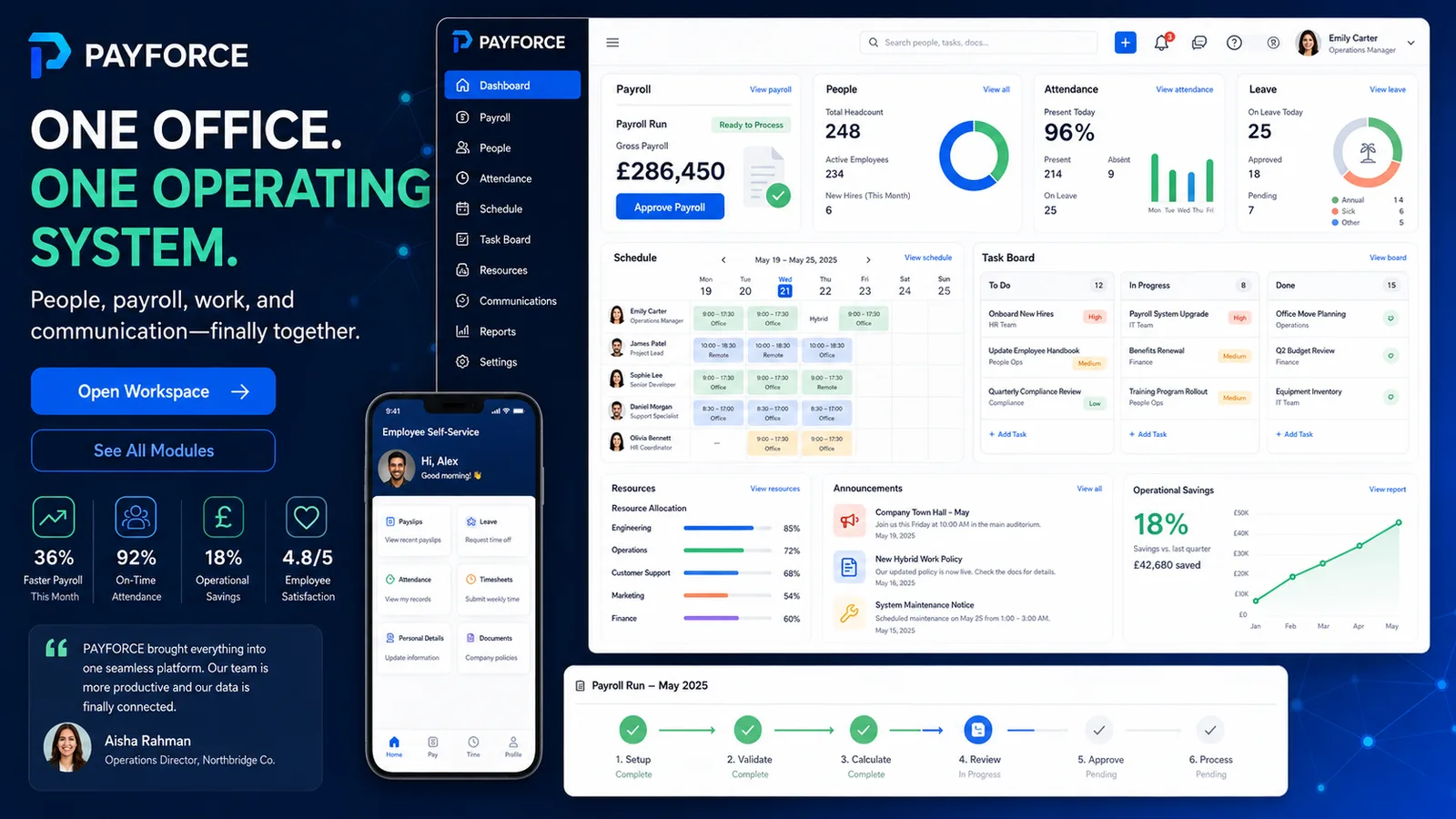 HR
HRPayforce: one office system instead of five task-specific ones.
An employee is represented once, so the record is authoritative rather than one of several.
React · Django · DigitalOcean
The problems HR teams bring to us.
HRIS and core people data.
The source of truth for employees, contractors, org structure, and position history. Built to survive the decade and to integrate with every downstream payroll, benefits, and finance system.
Talent acquisition and ATS.
Sourcing, screening, interviewing, offer management. Designed around the candidate experience, not the recruiter's Kanban board alone.
Learning and performance platforms.
LMS, LXP, skills, performance cycles, feedback tooling. Built for continuous people development, not the annual review weekend.
Workforce analytics and planning.
Headcount planning, attrition models, pay-equity analysis, D&I dashboards. With the statistical honesty and privacy discipline the topic demands.
What we've built for HR, more than once.
Employee and manager experiences.
Self-service portals and mobile apps that respect employees' time. One login, one surface, actual useful notifications.
ATS and talent-acquisition tooling.
Candidate-first funnels, structured interviewing, offer workflows, vendor integrations. Built for scale hiring without sacrificing candidate experience.
Learning and skills platforms.
Content delivery, skills taxonomies, pathways, credentials. Integrated with your HRIS and performance tools, not a silo.
People analytics.
Dashboards, models, and ad-hoc analysis tooling. With the privacy, access control, and aggregation thresholds the category requires.
Three ways to work with us
in hr.
Pick the shape that matches the commitment. Each model ships the same engineering standard. The difference is commercial and operating fit.
Dedicated teams
A cross-functional pod owning a workstream end-to-end.
Offshore development centre
A fully-managed engineering arm built in-region.
Staff augmentation
Senior engineers plugged straight into your team.
AI in hr & workforce.
Assistants that answer staff questions from your HR policies, job descriptions drafted to your standards, and screening support designed to be explainable and checked for bias.
Explore AI development“Enigmatix Global did some great work for Sainsbury's, bridging complex interactions between some older less flexible systems, some rigid vendor solutions and the new systems we were building. The software Enigmatix Global developers wrote stood up well, long beyond the interim scope of it needing to work for 12 to 18 months, and was still in active use 5 years after its creation, since it was part of mission-critical systems.”
Answers for hr & workforce buyers.
Still wondering something? Ask an engineer
Applicant tracking and recruitment tooling, onboarding workflows, HRIS and employee records, performance and review systems, time and attendance, and workforce analytics. HR platforms carry some of the most sensitive data in a business, so access design comes before feature design.
Yes. HRIS platforms, ATS tools, payroll and benefits providers, and identity systems for provisioning and deprovisioning. Joiner-mover-leaver flows get particular attention, because the failure mode is an ex-employee retaining access, which is a security incident rather than a bug.
By treating jurisdiction as a first-class dimension in the data model. Different countries impose different retention limits, works-council consultation duties, and rules on monitoring and pay transparency, so the system enforces the rules per population rather than applying a single global policy and hoping it is the strictest one.
We staff HR & workforce engagements with engineers and delivery leads who've shipped in the sector before, backed by patterns proven across 5,000+ projects. The domain literacy is learned on the ground, not looked up.
We work to employment law per jurisdiction, works-council rules, GDPR/privacy, and pay-transparency regulation. Every engagement starts with a compliance review so there's no ambiguity about which regimes apply. Every release ships with the audit trail your compliance team needs.
Yes. Most of our engagements connect to HRIS (Workday, SuccessFactors), ATS platforms, payroll, and benefits providers. We adopt your existing integration patterns rather than imposing a new one, and we write data contracts before we write integration code.
We design for privacy-aware engineering, multi-geo payroll integration, and role-based access discipline from day one, not as a post-launch afterthought. Performance budgets, SLO commitments, and ops runbooks are written into the statement of work.
Either. HR & workforce engagements run under all three of our engagement models. Dedicated teams, offshore development centres, or embedded staff augmentation. We pick the shape that matches your operating model, not our preferred one.
Discovery typically runs two to four weeks from first call to signed statement of work. First-engineer start dates follow within another week or two. The exact timeline depends on the shape and on the clearance or onboarding your environment requires.
Let's build from here.
Thirty minutes with an engineer who builds. No sales, no drip campaign. If we're the wrong fit we'll tell you and point you somewhere better.