
Logistics software development
for the real world.
Fleet telematics, last-mile routing, TMS, warehouse automation, and rider-facing apps. Real-time operations is where the physical and digital worlds collide. We engineer for both sides.
Latency costs money in the real world.
Logistics software is judged by seconds. A routing engine that takes 3 seconds longer per stop costs you an extra driver per depot. A dispatch API that times out leaves a rider idle at the curb. Software quality has a direct, measurable rand-per-hour impact.
We've built last-mile platforms for grocery and pharmacy, inter-modal freight systems, TMS/WMS upgrades, and driver apps in seven languages. Every project has an SLO dashboard that the ops director looks at more often than the engineering team does.
Things we've shipped
in logistics.
A sample of what we've built in this sector. We omit client names by default and share them under NDA when you want to dig into a specific engagement.
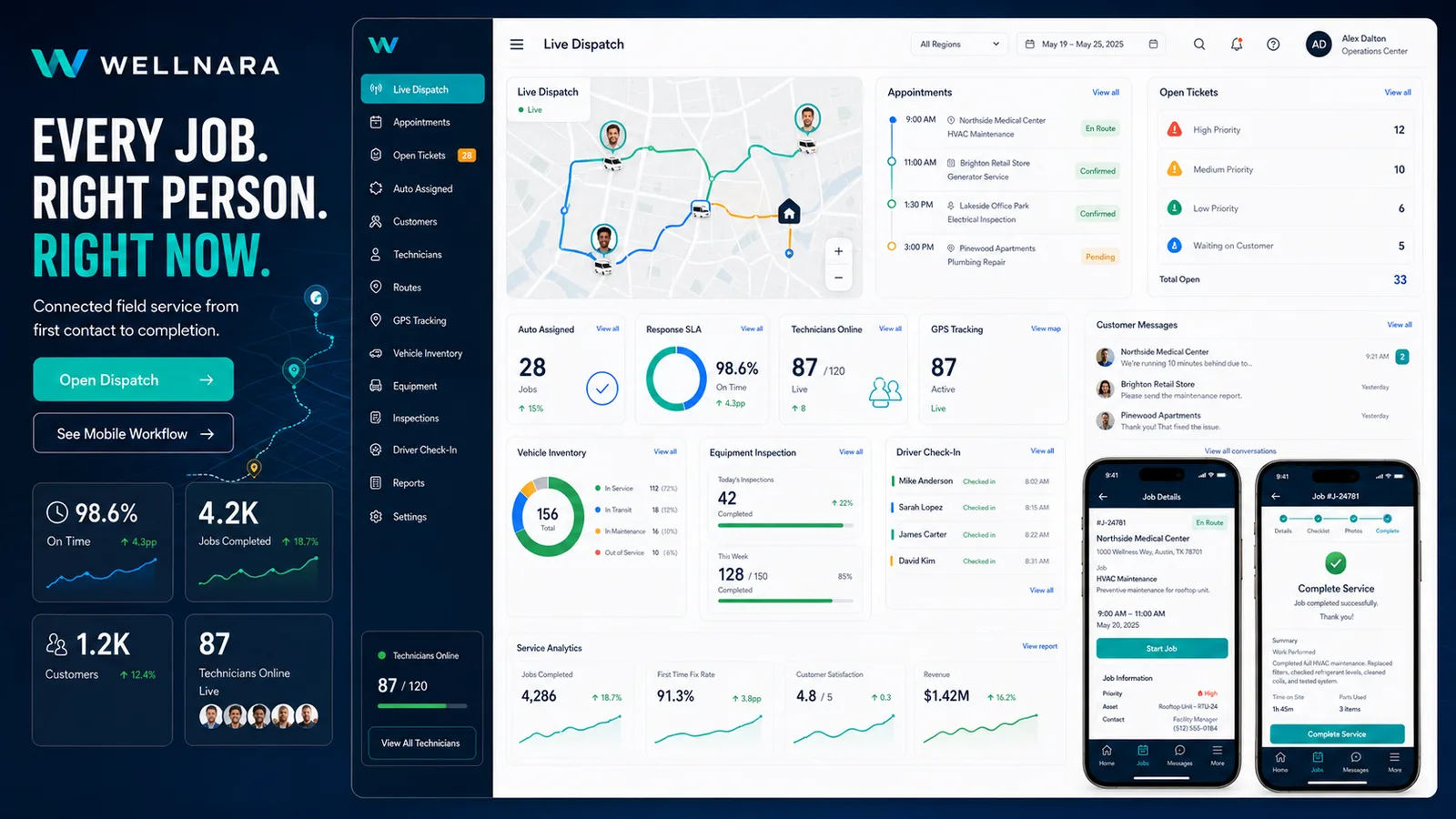
The problems logistics teams bring to us.
Last-mile routing under pressure.
Real-time vehicle routing with 200+ constraints, 10k stops per depot. Driver assignments in under 45 seconds, re-optimisation as conditions change.
TMS and freight orchestration.
Carrier integrations, rate shopping, tracking normalisation, exception handling. The control tower your ops team actually wants to use.
Driver and rider apps.
Offline-first, low-battery-friendly, multi-language. Designed with drivers. They give us the feedback, not the marketing team.
Warehouse automation.
WMS integrations, pick-path optimisation, AGV/ASRS coordination, slotting. Where the fulfilment centre meets the software.
What we've built for logistics, more than once.
Real-time dispatch and routing.
OR-Tools / Mapbox / Jsprit-based solvers wrapped in production-grade services. Replayable, observable, tunable by ops.
Telematics and tracking.
Device ingestion pipelines, fleet health dashboards, driver-behaviour analytics. From the OBD port to the finance model.
Driver / rider mobile apps.
React Native or native. Offline-first, sync-aware, built to run on a sub-$100 Android in rural territory.
Freight platforms.
Multi-carrier booking, tender management, exception workflows, rate management. Built for LSPs and shippers both.
Three ways to work with us
in logistics.
Pick the shape that matches the commitment. Each model ships the same engineering standard. The difference is commercial and operating fit.
Dedicated teams
A cross-functional pod owning a workstream end-to-end.
Offshore development centre
A fully-managed engineering arm built in-region.
Staff augmentation
Senior engineers plugged straight into your team.
AI in logistics & mobility.
Reading bills of lading, invoices and proofs of delivery into structured data, and agents that chase exceptions across carriers and systems with a person approving the outcome.
Explore AI development“We are a mental health charity and not tech-minded. We needed to improve our patient registration system but wanted a company that we can relate to. Hassan took the time to meet with me and patiently went through our process to find a personalised solution for us. Hassan's team did a great job streamlining our process and connected our registration system to our patient management software. Whenever we have a glitch, they resolve this quickly. Enigmatix Global provides a personal and efficient service and we have adopted them to be our IT provider.”
Answers for logistics & mobility buyers.
Still wondering something? Ask an engineer
Transport and warehouse management, route planning and optimisation, track-and-trace, freight and customs documentation, driver and courier apps, and the telemetry pipelines underneath them. Logistics software lives or dies on how it behaves when the network drops, so offline tolerance and reconciliation are design inputs rather than later fixes.
Yes. Carrier APIs and EDI, customs and port systems, and the ERP or WMS already running the operation. We adopt the integration patterns your estate already uses instead of introducing a new one, and we write data contracts first so a carrier changing a field does not silently corrupt a week of shipments.
Yes. Ingest from devices and vehicles, stream processing, geospatial querying, and the operational dashboards on top. The engineering question is usually not whether you can collect the data but what the system does when a device goes quiet for six hours, which is where we spend the design effort.
We staff Logistics & mobility engagements with engineers and delivery leads who've shipped in the sector before, backed by patterns proven across 5,000+ projects. The domain literacy is learned on the ground, not looked up.
We work to transport regulations per jurisdiction, driver-hours rules, and cross-border customs. Every engagement starts with a compliance review so there's no ambiguity about which regimes apply. Every release ships with the audit trail your compliance team needs.
Yes. Most of our engagements connect to TMS, WMS, telematics, dispatch, and carrier integrations (DHL, UPS, FedEx, regional). We adopt your existing integration patterns rather than imposing a new one, and we write data contracts before we write integration code.
We design for real-time dispatch under 45s, offline-first driver apps, and systems built for 24/7 operations from day one, not as a post-launch afterthought. Performance budgets, SLO commitments, and ops runbooks are written into the statement of work.
Either. Logistics & mobility engagements run under all three of our engagement models. Dedicated teams, offshore development centres, or embedded staff augmentation. We pick the shape that matches your operating model, not our preferred one.
Discovery typically runs two to four weeks from first call to signed statement of work. First-engineer start dates follow within another week or two. The exact timeline depends on the shape and on the clearance or onboarding your environment requires.
Let's build from here.
Thirty minutes with an engineer who builds. No sales, no drip campaign. If we're the wrong fit we'll tell you and point you somewhere better.