
Public-sector software development
people don't complain about.
Digital service standards, case management, identity, payments, and the citizen-facing apps that have to work for everyone. Accessible, bilingual, resilient, and defensible under FOI.
Accessible is the floor, not the ceiling.
Public-sector software has no luxury of a target demographic. It's for everyone. The 78-year-old on a 3G phone. The screen-reader user on a 10-year-old laptop. The civil servant on Internet Explorer on a locked-down desktop. That bar disciplines the whole engineering practice.
We deliver against service standards (UK GDS, EU GovTech, GCC Digital Government). Our projects clear WCAG AA, pass pen-tests, and come with the documentation a National Audit Office reviewer can evaluate without handholding.
Flagship work from
across the practice.
The engineering behind public sector engagements is the same discipline we apply everywhere — here's a sample of it. We omit client names by default and share them under NDA.
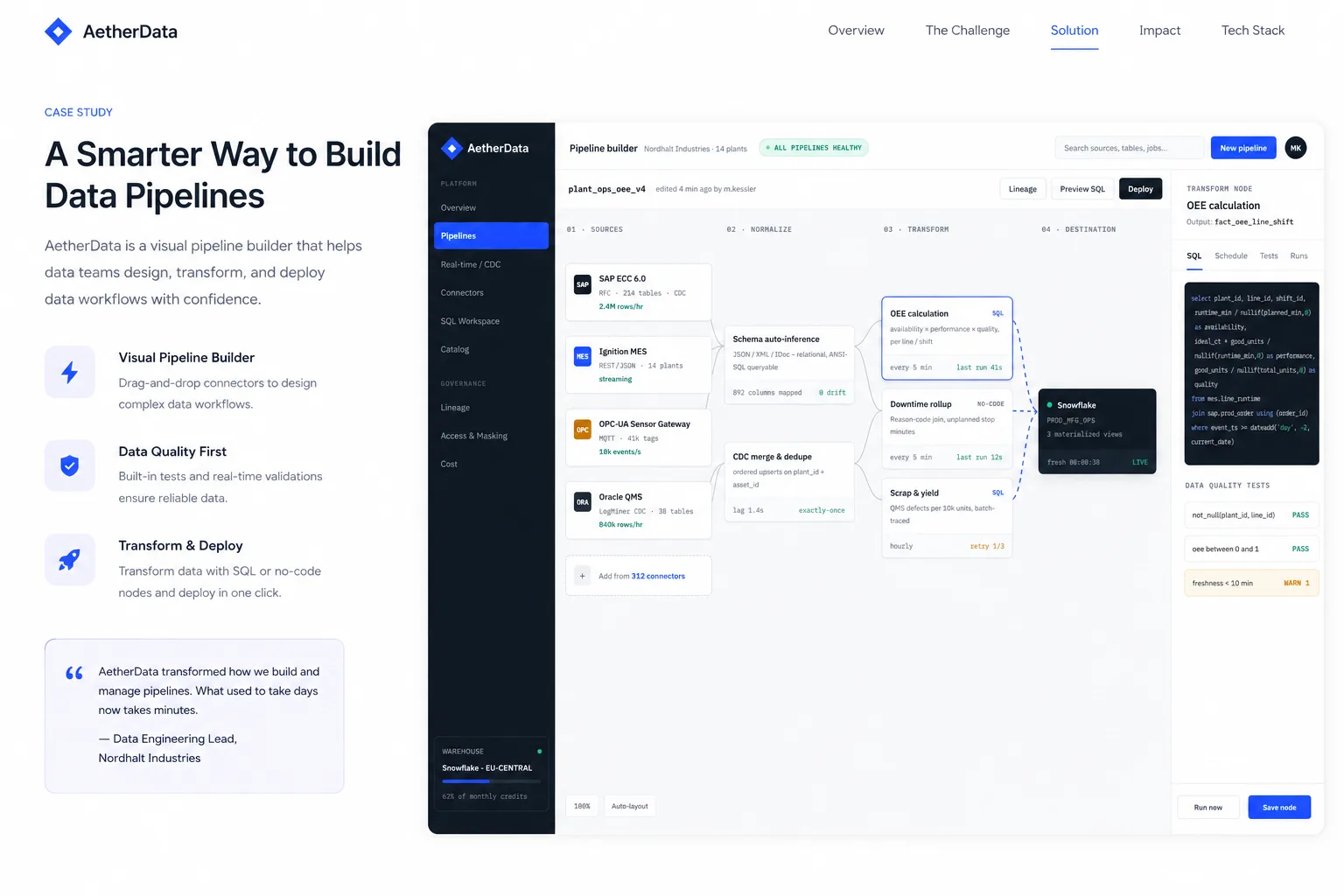 Manufacturing · North America
AetherData: enterprise data fabric.
Business teams self-serve integrations and dashboards that previously needed engineering.
React · Django · Django REST Framework · PostgreSQL
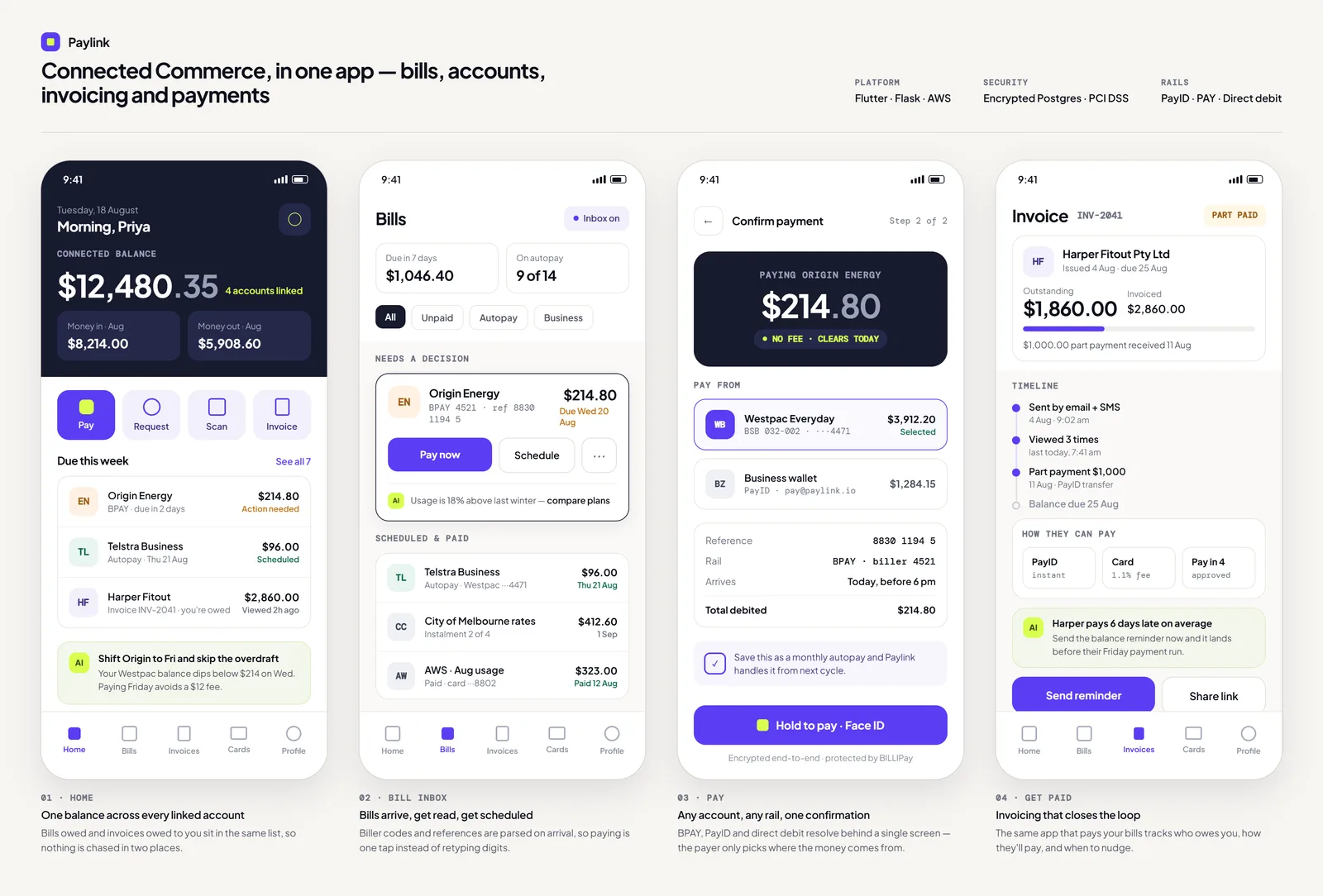 Finance · Australia
Paylink: connected commerce for Australian SMBs.
SMBs get paid, pay bills and reconcile from one app instead of four tools.
Flutter · Flask · PostgreSQL · AWS
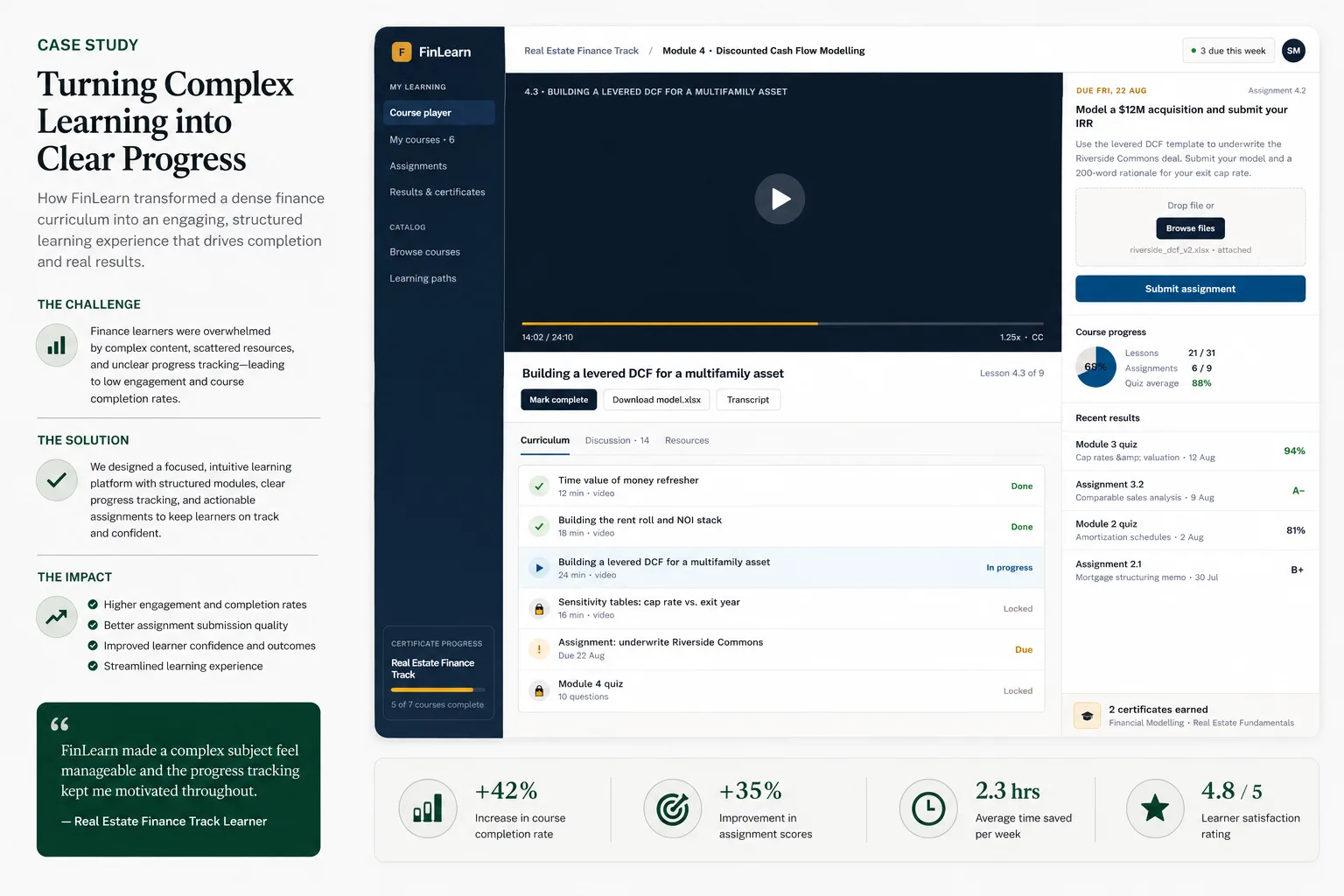 Education
Finlearn: finance & operations academy.
Admins run cohorts in a fraction of the previous effort.
React · Django · Wagtail · PostgreSQL
The problems public sector teams bring to us.
Service transformation from paper to digital.
End-to-end re-design, not a PDF on a website. User research, service patterns, live-phased rollouts with the contact centre in the loop.
Case management for caseworkers.
The internal tools are usually the hardest part. We design with caseworkers, not for them. Shortcuts, bulk actions, audit trails that don't slow them down.
Identity and access.
Federated identity, age assurance, verified attributes. Compliant with the national schemes, usable by citizens who distrust all of them.
Legacy decommissioning.
Mainframes, Delphi apps, Oracle Forms. Migrated safely with FOI-defensible data lineage.
What we've built for public sector, more than once.
Citizen-facing service journeys.
GOV.UK-style end-to-end services. Built with the service standard in mind, not retro-fitted to pass an assessment.
Internal case management.
Caseworker cockpits with the shortcuts, queues, and bulk tools experienced staff actually need.
Identity and integration layers.
Federated authn, verified-attribute brokers, integrations with national schemes and legacy back-ends.
Operational analytics.
Service-level reporting for ministers, performance dashboards for delivery leads, insights for policy teams. One platform, three audiences.
Three ways to work with us
in public sector.
Pick the shape that matches the commitment. Each model ships the same engineering standard. The difference is commercial and operating fit.
Dedicated teams
A cross-functional pod owning a workstream end-to-end.
Offshore development centre
A fully-managed engineering arm built in-region.
Staff augmentation
Senior engineers plugged straight into your team.
AI in public sector.
Assistants that help caseworkers find the right policy, drafted correspondence for officers to approve, and citizen-facing services designed for accessibility and transparency.
Explore AI development“Hassan and the Enigmatix Global team have been indispensable partners as we rebuilt our client-facing applications into a single platform. As well as being exceptional technically, they consistently invest the time to understand the product and suggest how it can be enhanced and improved.”
Answers for public sector buyers.
Still wondering something? Ask an engineer
Yes, and it helps that Enigmatix Global Ltd is a UK-registered company, so the contracting relationship sits under English law. We work to the delivery expectations public bodies apply: accessibility as a hard requirement, service standards, open documentation, and a clear exit path so you are never locked to us.
As an acceptance criterion, not an audit finding. WCAG 2.2 AA is designed in, checked automatically in the pipeline, and verified manually with assistive technology before release. Retro-fitting accessibility is always more expensive than building it, and in the public sector it is also a legal exposure.
Yes, incrementally. Strangler-fig migrations that stand new services alongside the old system and move traffic across in stages, so the service keeps running throughout. Public-sector legacy usually carries undocumented rules, so the first phase is normally discovery of what the system actually does rather than what its documentation claims.
We staff Public sector engagements with engineers and delivery leads who've shipped in the sector before, backed by patterns proven across 5,000+ projects. The domain literacy is learned on the ground, not looked up.
We work to GDS/Service Standards, WCAG AA, GDPR, national identity schemes, and FOI defensibility. Every engagement starts with a compliance review so there's no ambiguity about which regimes apply. Every release ships with the audit trail your compliance team needs.
Yes. Most of our engagements connect to legacy mainframes, Oracle Forms estates, national identity providers, and verification services. We adopt your existing integration patterns rather than imposing a new one, and we write data contracts before we write integration code.
We design for accessibility-first (including non-digital users), pen-tested, and National Audit Office reviewable from day one, not as a post-launch afterthought. Performance budgets, SLO commitments, and ops runbooks are written into the statement of work.
Either. Public sector engagements run under all three of our engagement models. Dedicated teams, offshore development centres, or embedded staff augmentation. We pick the shape that matches your operating model, not our preferred one.
Discovery typically runs two to four weeks from first call to signed statement of work. First-engineer start dates follow within another week or two. The exact timeline depends on the shape and on the clearance or onboarding your environment requires.
Let's build from here.
Thirty minutes with an engineer who builds. No sales, no drip campaign. If we're the wrong fit we'll tell you and point you somewhere better.