
Mobile app development
built with the same rigour as your backend.
Native iOS, native Android, React Native, and Flutter. We also handle the backend-for-frontend, release engineering, and store operations that mobile teams routinely underinvest in.
Mobile as a proper engineering discipline.
The usual mobile failure mode repeats. A web team ships an app, discovers that offline sync, push notifications, store review cycles, and the OEM fragmentation tax are real problems, and six months later the app sits in maintenance purgatory. Mobile as a discipline is how we avoid that.
We build native iOS, native Android, and cross-platform apps in React Native and Flutter, with the same rigour we apply to your backend. Offline-first where needed. Store-release automated. Crash-rate budgeted. And a backend-for-frontend that's a mobile contract, not a repurposed web API.
Shipped under this discipline.
A sample of projects where this capability was load-bearing. We omit client names by default and share them under NDA when you want to dig into a specific engagement.
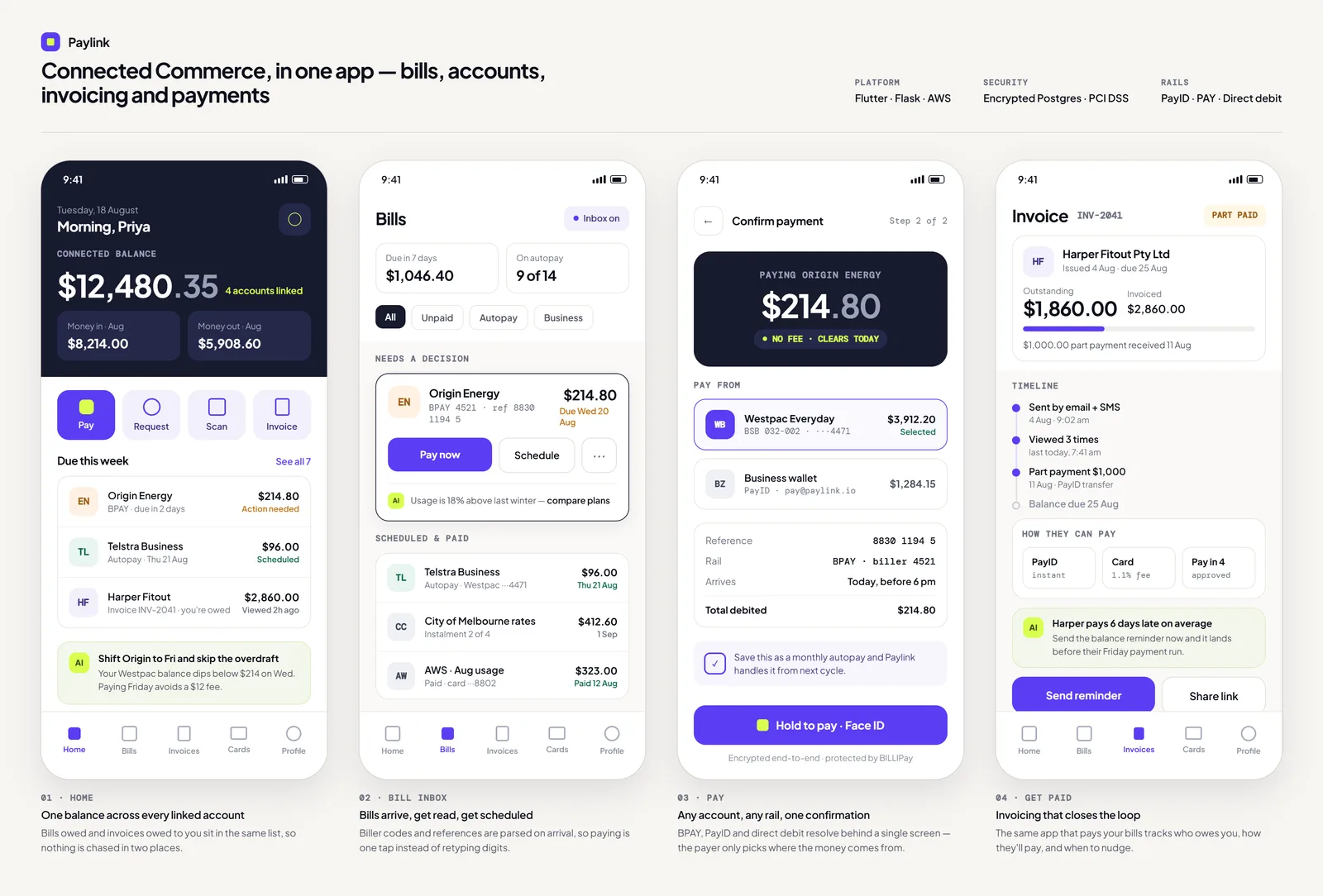 Finance · Australia
Paylink: connected commerce for Australian SMBs.
SMBs get paid, pay bills and reconcile from one app instead of four tools.
Flutter · Flask · PostgreSQL · AWS
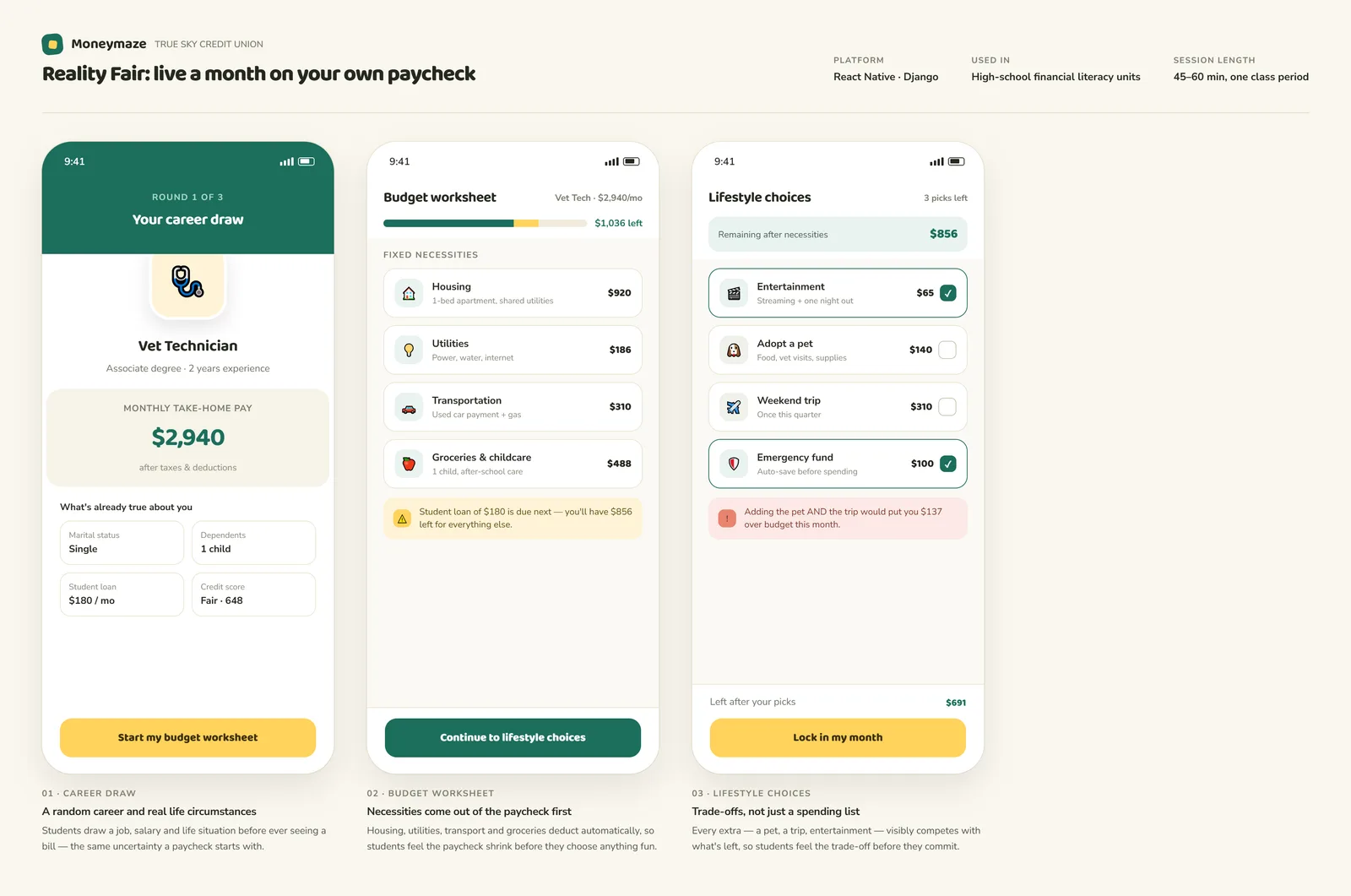 Education
Moneymaze: financial literacy for a credit union's members.
Learning comes from consequence rather than presentation: participants see how earlier decisions constrain later ones.
React Native · Django · Django REST Framework · Python
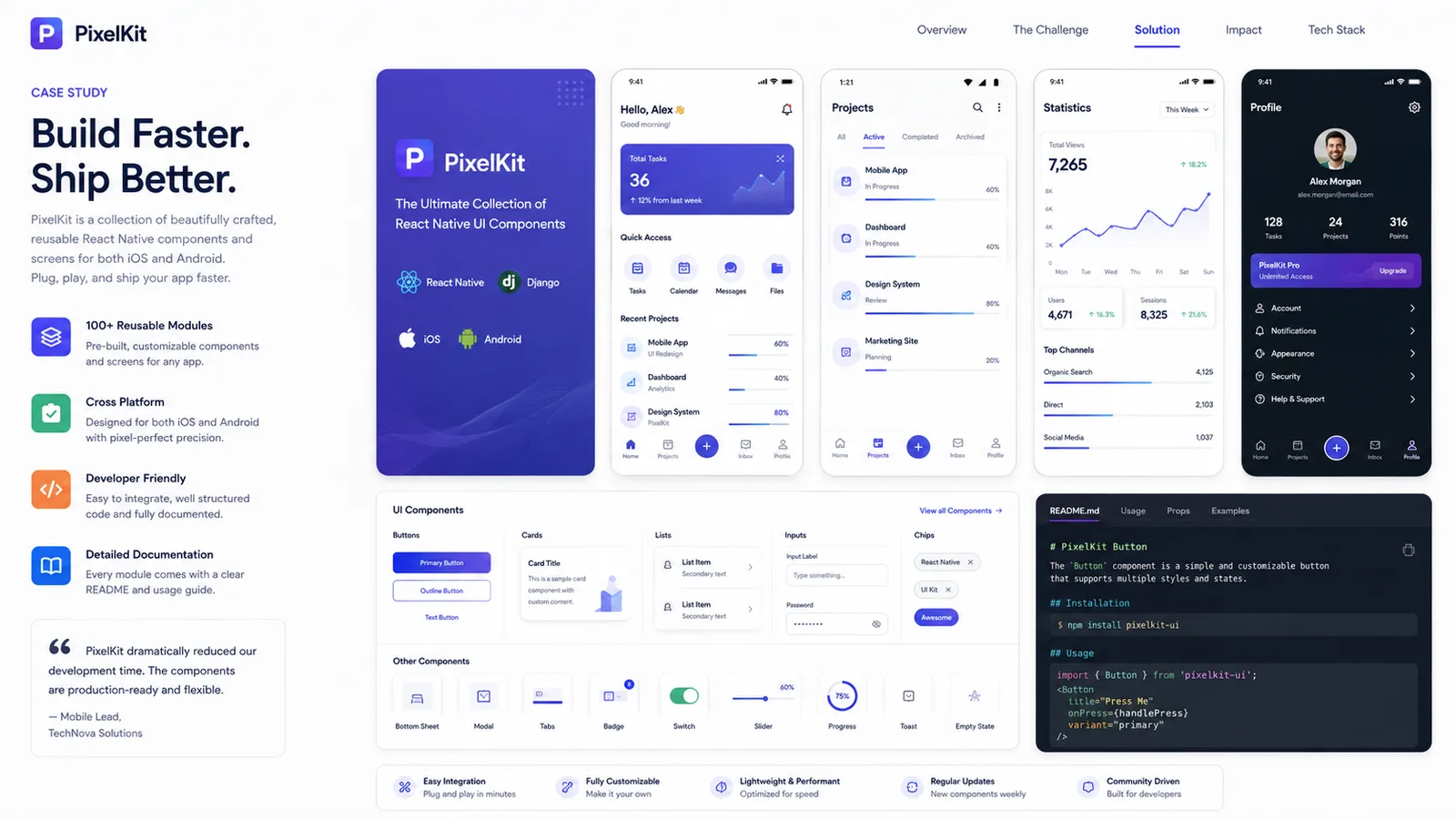 Manufacturing
Pixelkit: Operations platform.
A web and mobile app for operations, built with React Native and Django. Core workflows, records and reporting run through one validated data model that non-technical staff operate day to day.
React Native · Django
- Finance
Stakeflow: Web3 platform.
A mobile app for on-chain finance, built with React Native, Redux, Node.js, Express, MongoDB and GraphQL. Wallet connection, contract calls and transaction state are wrapped in an interface that non-crypto users can operate with confidence.
React Native · Redux · Node.js · Express
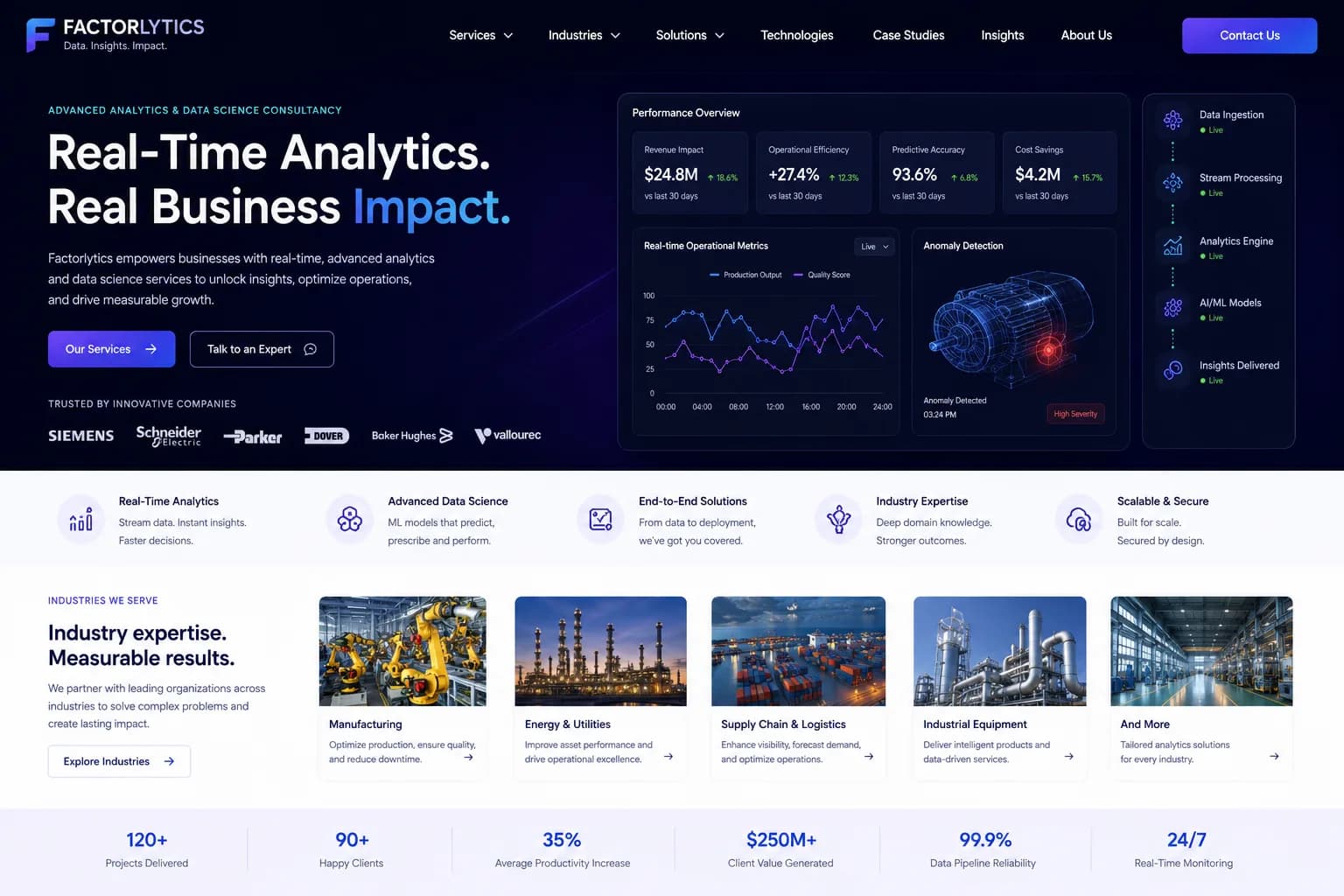 Manufacturing
Factorlytics: Custom application.
A web app for a focused workflow, built with React, Django, AWS, Python, Jenkins and Kafka. The core workflow is modelled properly once, so data stays consistent and the product is straightforward to extend.
React · Django · AWS · Python
 Retail
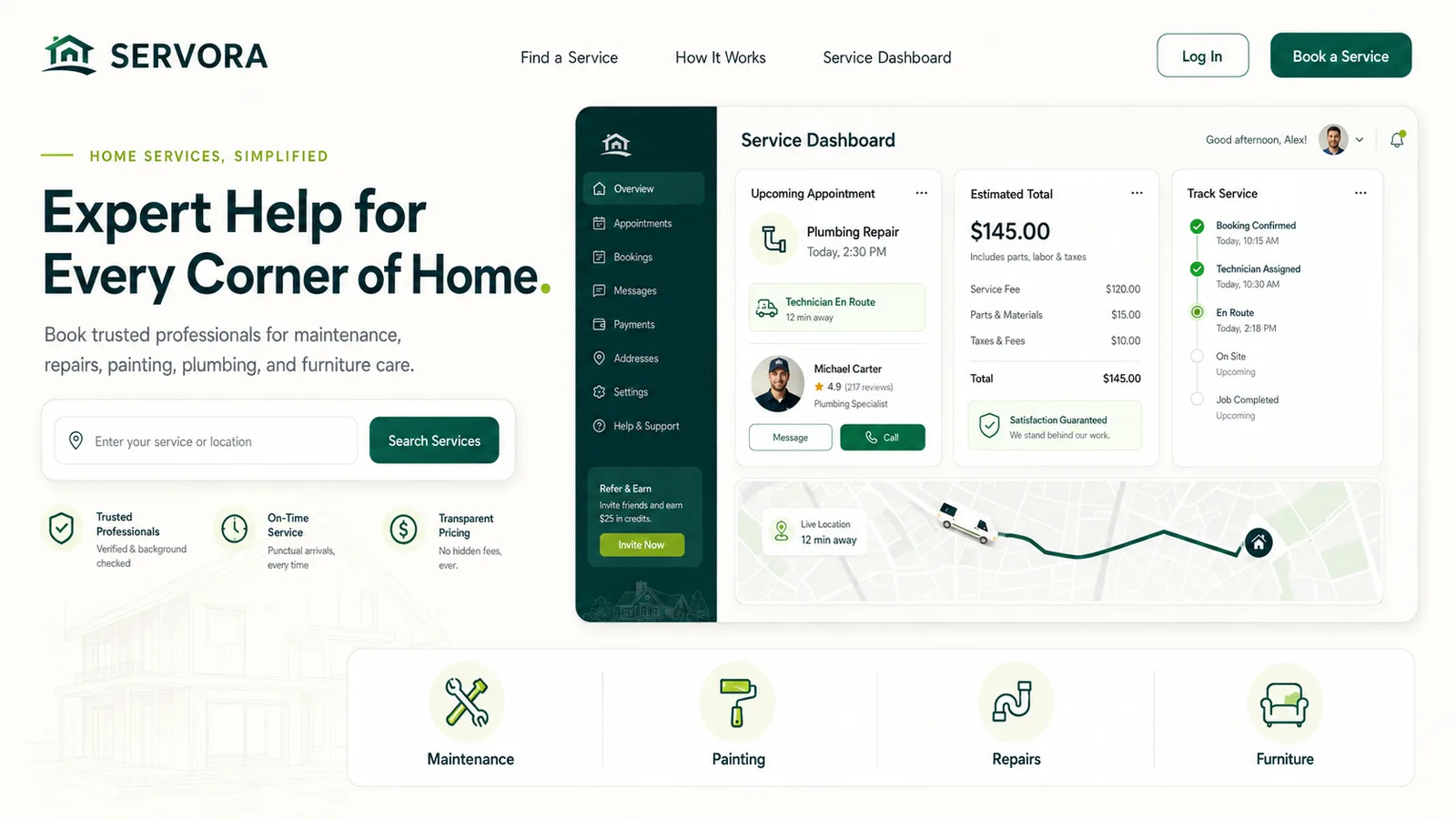
Servora: Custom application.
A web app for a focused workflow, built with Vue, Django REST Framework and PostgreSQL. The core workflow is modelled properly once, so data stays consistent and the product is straightforward to extend.
Vue · Django REST Framework · PostgreSQL
Native, cross-platform and everything behind the app.
A typical engagement is the app plus the BFF plus release tooling, not just the UI. We scope the exact mix during discovery.
Native iOS apps.
An iOS app that feels native because it is. Swift and SwiftUI, with UIKit when the case calls for it, Core Data or SwiftData where persistence matters, Combine or async/await for concurrency, and proper modularisation so large apps still build in under a minute.
Native Android apps.
An Android app that holds up across the real device landscape, not just your test phone. Kotlin with Jetpack Compose, clean-architecture modules, Hilt for DI, Room for local data, coroutines and Flow for async, and WorkManager for background jobs, tested on real devices across the OEM and version matrix.
React Native apps.
One codebase, both stores, without the usual cross-platform tax. TypeScript React Native with the new architecture where appropriate, native modules for performance-critical paths, and a build pipeline that produces signed binaries your QA team can flash on day one.
Flutter apps.
Pixel-identical on iOS and Android from a single team. Dart and Flutter for teams that want one codebase across iOS, Android, and sometimes web, with Riverpod or Bloc for state, organised widget trees, and platform channels where native capability is needed.
Mobile BFF and APIs.
A backend that serves mobile properly instead of forcing it to fit a web API. A backend-for-frontend with offline-first payloads, efficient pagination, versioned endpoints, and mobile-aware caching, so your web team never has to retrofit the mobile team's needs into a shared API.
Release engineering and store ops.
Ship updates calmly, even the Friday-night hotfix. Fastlane pipelines, signed builds, staged rollouts, crash-free-sessions SLOs, App Store and Play Store listing maintenance, phased review management, and the runbook for 'critical bug, ship a hotfix before Friday'.
Scoping mobile applications? Get an engineer's read on your build in 30 minutes — no sales pitch, no decks.
Start a projectThe mobile stack we ship with.
We pick the platform per product, not per preference. The tools our mobile engineers use most:
Pick the engagement model
that fits the commitment.
The same mobile applications work ships under any of these three commercial shapes. The difference is in how you hold us accountable and how you scale up or down.
AI in your mobile app.
Vision, speech and assistant features inside iOS and Android apps, using on-device or cloud models, designed for patchy connections and user privacy.
Explore AI developmentWhat to know before a mobile build.
Can't find what you're looking for? Email discovery@enigmatixglobal.com and we'll reply within one working day.
Native wins when the app leans hard on OS-specific capability, animation performance, or deep hardware integration. Cross-platform wins when the app is mostly UI-and-forms and the team's existing skill base is web. We decide per product, not per preference. The discovery phase produces a written recommendation with the trade-offs.
React Native suits teams with an existing React or web codebase and a hiring pool around it. Flutter suits teams prioritising a single pixel-identical codebase across iOS and Android with strong widget composition. Both are production-ready. The choice is mostly about team continuity, not capability.
Yes. We set up App Store Connect and Play Console, handle certificate and provisioning-profile management, run phased rollouts, respond to store-review comments, and handle the 'rejected for metadata reasons' theatre. We also maintain the store listings and assets on your behalf when the engagement extends into operations.
Yes. We regularly inherit mobile apps built by agencies that have moved on, or legacy native apps that need modernisation. Week one is a health check. Crash rates, technical debt, architecture review, store-ratings triage. Week two onwards is the agreed remediation or feature plan.
Offline-first is a first-class design decision, not a feature bolted on at the end. We model local persistence (Core Data, Room, Realm, SQLite), design conflict resolution, build a mobile-aware sync protocol, and test it against realistic network-failure scenarios. The BFF is designed knowing it serves offline-capable clients.
Push, deep linking, and analytics are part of the mobile platform plumbing, not an add-on. We set up Firebase Cloud Messaging or APNs direct, Universal Links and App Links, deferred-deep-link attribution, and event instrumentation through Amplitude, Mixpanel, or your preferred analytics vendor, with a privacy and consent layer you can defend in court.
“Dragonfly has been working with the team at Enigmatix Global for several years now on building out our web-based platform and APIs. One of their strengths is quickly building out a multi-disciplinary team to work on the development and delivery of features with different technical requirements. Their support has allowed us to accelerate our development work without building an internal team. They have also worked seamlessly with other third parties both during the acquisition of Dragonfly and development of our mobile app. Enigmatix Global has been instrumental in bringing our ideas to life and providing guidance to help us make the best technical decisions. I would recommend getting in touch with them if you're looking for support.”
Let's build from here.
Thirty minutes with an engineer who builds. No sales, no drip campaign. If we're the wrong fit we'll tell you and point you somewhere better.