
Generative AI development
built into your product.
Drafting, summaries, document generation, image editing and voice, built as features your users rely on. Every output has a schema, a tone guide and a review step where it matters.
Generation your users can trust.
A model that writes a decent paragraph in a playground is easy. A feature that writes the right paragraph, in your voice, in the right format, every time a user clicks the button, is the real work. We design the inputs, the templates and the checks around the model so the output is useful before anyone edits it.
We treat generated content like any other data your product produces. It has a shape, it gets validated, and it gets logged. Where a mistake would cost money or trust, a person approves it before it goes out. Where it wouldn't, we keep the flow fast and measure quality in the background.
Shipped under this discipline.
A sample of projects where this capability was load-bearing. We omit client names by default and share them under NDA when you want to dig into a specific engagement.
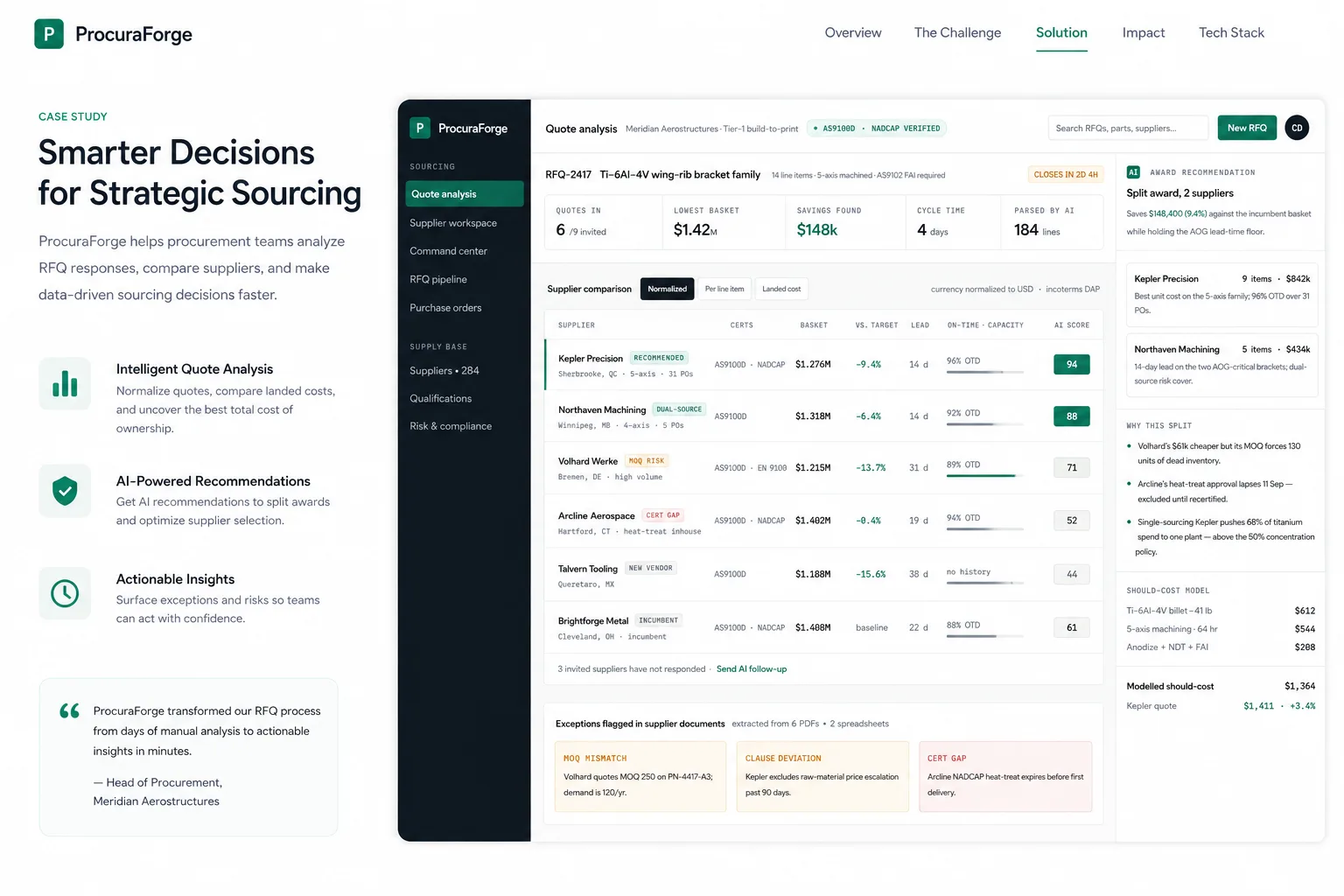 Manufacturing · North America
ProcuraForge: AI procurement automation.
A single source of truth for POs, commitments and supplier conversations.
React · Django REST Framework · PostgreSQL
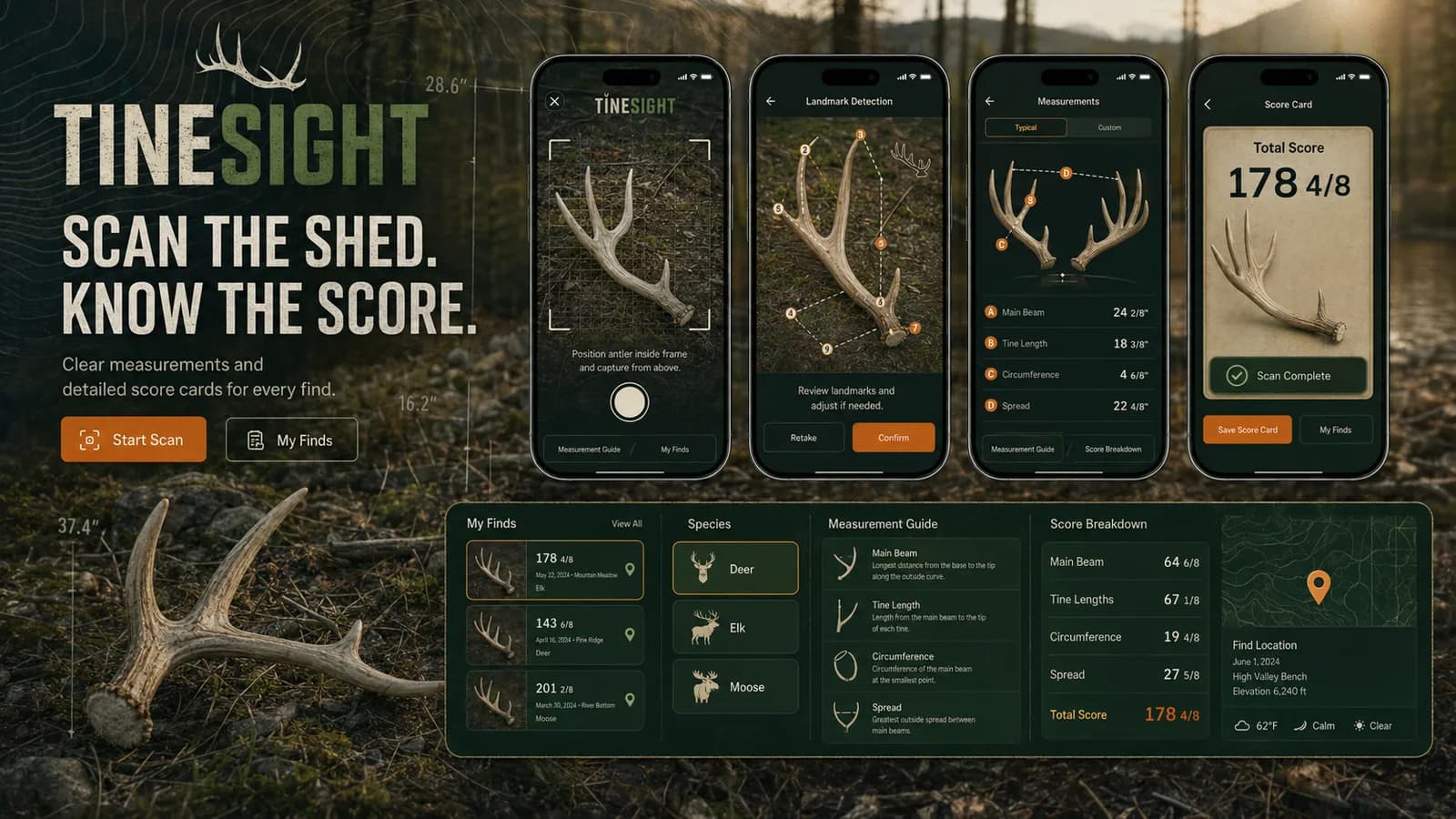 Retail · North America
Shed Happens: photo-score shed antlers.
A collector photographs a find and gets a measured, scored result instead of working a paper card by hand.
React Native · Computer vision · Django · Django REST Framework
What we build with generative models.
Most projects start with one high-value feature and grow from there. We agree the quality bar and how we will test it before we write the first prompt.
Drafting and summarisation.
First drafts and short summaries that save your users real time. Email replies, case notes, meeting summaries and product descriptions, generated from the records already in your system and editable before they are sent.
Document generation.
Reports, proposals and contracts assembled from your own templates. The model fills the sections that need judgement, fixed clauses stay fixed, and the result exports to Word or PDF with your formatting intact.
Image generation and editing.
On-brand visuals without a design queue. Product shots on new backgrounds, resized campaign assets, background removal and text-to-image drafts, with style references and content filters applied on every request.
Multimodal input: vision and speech.
Features that read images and listen as well as write. Extracting details from photos and scanned forms, transcribing calls, and reading text aloud with natural voices, all feeding the same structured data model.
Content pipelines with human review.
Bulk generation that a person signs off. Queues, approval screens and audit history for teams producing content at volume, so editors spend their time on judgement calls rather than retyping.
Brand voice and structured outputs.
Output that sounds like you and fits your data. Tone guides, banned-phrase lists and example libraries steer the style, while JSON schemas and validators make sure every response drops cleanly into your database or UI.
Scoping generative AI development? Get an engineer's read on your build in 30 minutes — no sales pitch, no decks.
Start a projectTools we generate with.
Model choice depends on the medium, the quality bar and the cost per request. The tools we reach for most often:
Pick the engagement model
that fits the commitment.
The same generative AI development work ships under any of these three commercial shapes. The difference is in how you hold us accountable and how you scale up or down.
More AI services.
Each kind of AI work has its own page. Most projects combine two: an assistant grounded in your data, and an agent or integration that acts on it.
Explore AI development- AI agent developmentAgents that plan, call your tools and hand off to people when unsure.
- LLM integration and RAGLanguage models wired into your systems and answering from your documents.
- AI chatbot developmentCustomer and internal assistants that answer from your own data.
- AI consultingUse-case selection, data readiness and governance before you build.
Questions about generative AI.
Can't find what you're looking for? Email discovery@enigmatixglobal.com and we'll reply within one working day.
It depends on three things: how many features you need, how strict the quality bar is, and how much human review the workflow needs. A single drafting or summary feature inside an existing product is a small, contained build. Document generation with legal templates, or image work with brand rules, takes longer because the testing takes longer. We also estimate the running cost per request up front, since model usage is an ongoing bill.
We give the model the facts rather than asking it to recall them. Figures, names and dates come from your records and are inserted by code, not invented by the model. Outputs are checked against a schema and test cases before release. Hallucination can be reduced a lot but not removed entirely, so high-stakes documents keep a human approval step.
Yes, within limits. We build a tone guide, a set of approved examples and a list of phrases to avoid, then test outputs against them. For most brands that is enough. If prompting cannot get close, we look at fine-tuning a smaller model on your approved content.
You do. Prompts, templates, evaluation datasets and code we write for you are handed over as part of the project. Rights in generated content are also governed by each model provider's terms, which we review with you before choosing a provider.
We use business API tiers where providers state they do not train on your inputs, and we can route requests through UK or EU regions on Azure, AWS or Google Cloud. Personal data is minimised or removed before it reaches the model where the feature allows. We help you document the processing for your DPIA, but your data protection officer signs it off.
Generative features produce content when a user or a process asks for it, such as a draft, a report or an image. An agent decides which steps to take and calls tools to finish a task. A chatbot holds a conversation. Many products use a mix, and we can scope which one a given problem needs.
“Enigmatix Global did some great work for Sainsbury's, bridging complex interactions between some older less flexible systems, some rigid vendor solutions and the new systems we were building. The software Enigmatix Global developers wrote stood up well, long beyond the interim scope of it needing to work for 12 to 18 months, and was still in active use 5 years after its creation, since it was part of mission-critical systems.”
Let's build from here.
Thirty minutes with an engineer who builds. No sales, no drip campaign. If we're the wrong fit we'll tell you and point you somewhere better.