
LegalTech software development
that lawyers actually use.
Matter management, contract lifecycle, e-discovery, document automation, and AI-assisted review. Built for the billable hour, the audit trail, and the partner who hates new software on principle.
The user is allergic to change.
Legal software has the hardest adoption curve in enterprise tech. The users are expensive, sceptical, and under time pressure. Every feature has to earn its keep in the first five minutes or it gets abandoned. The data is also among the most sensitive in enterprise. Privileged communications, litigation holds, client-confidential documents.
We've built matter management systems, contract lifecycle platforms, e-discovery pipelines, and AI-assisted review tools for law firms, in-house legal teams, and LegalTech vendors. Every project goes through a usability review with practising lawyers, and a security review with the firm's risk team, before a single feature ships.
Flagship work from
across the practice.
The engineering behind legal engagements is the same discipline we apply everywhere — here's a sample of it. We omit client names by default and share them under NDA.
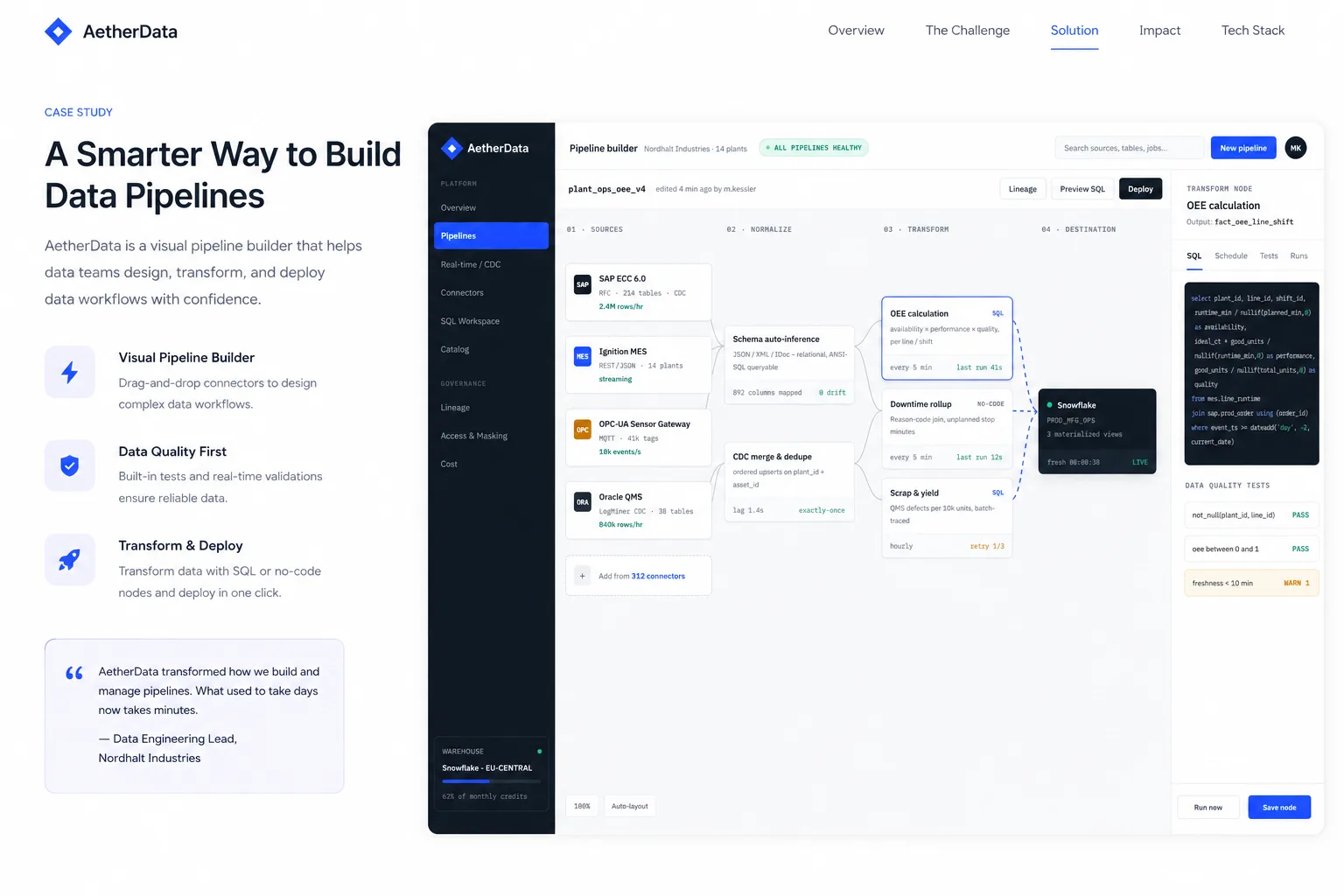 Manufacturing · North America
AetherData: enterprise data fabric.
Business teams self-serve integrations and dashboards that previously needed engineering.
React · Django · Django REST Framework · PostgreSQL
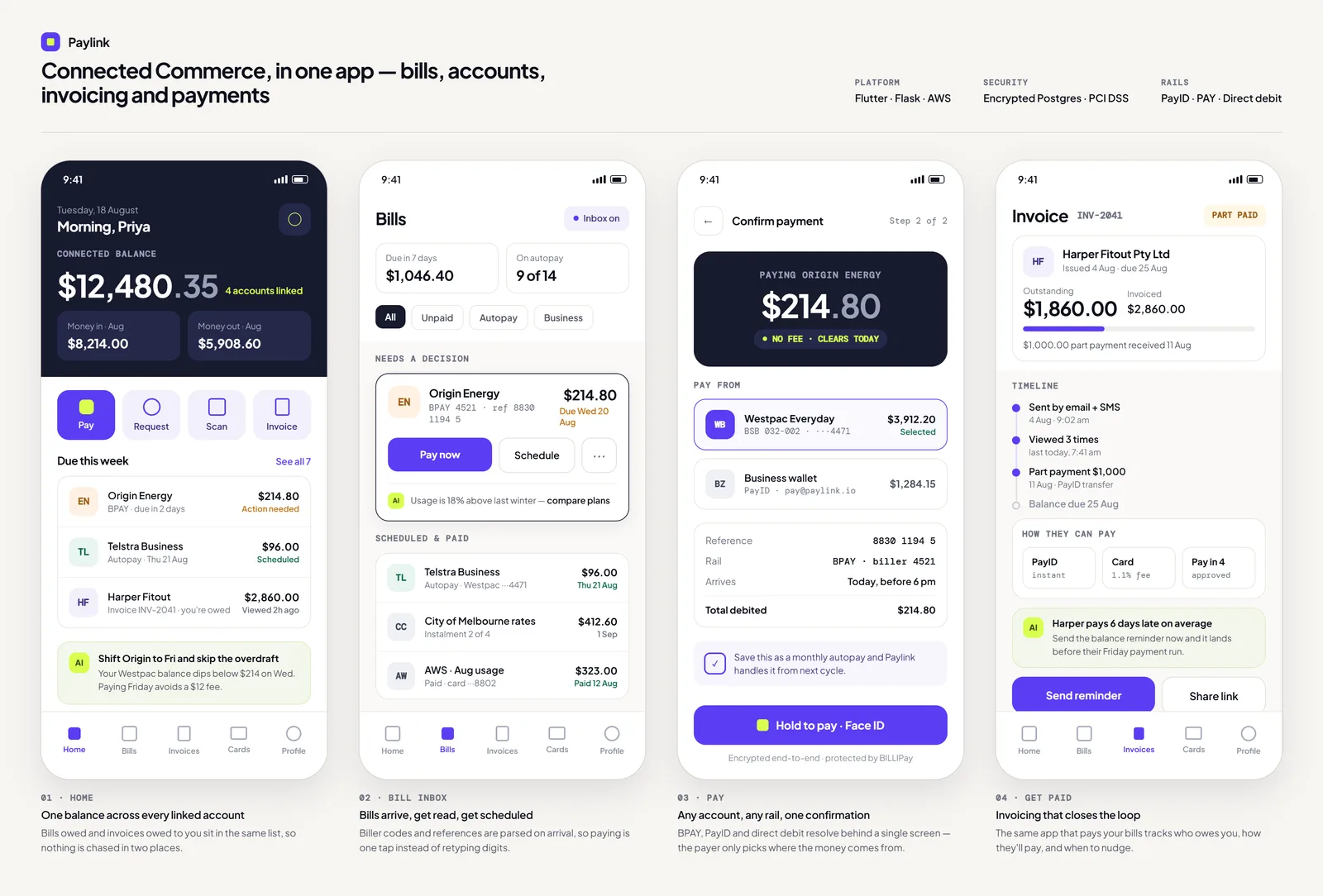 Finance · Australia
Paylink: connected commerce for Australian SMBs.
SMBs get paid, pay bills and reconcile from one app instead of four tools.
Flutter · Flask · PostgreSQL · AWS
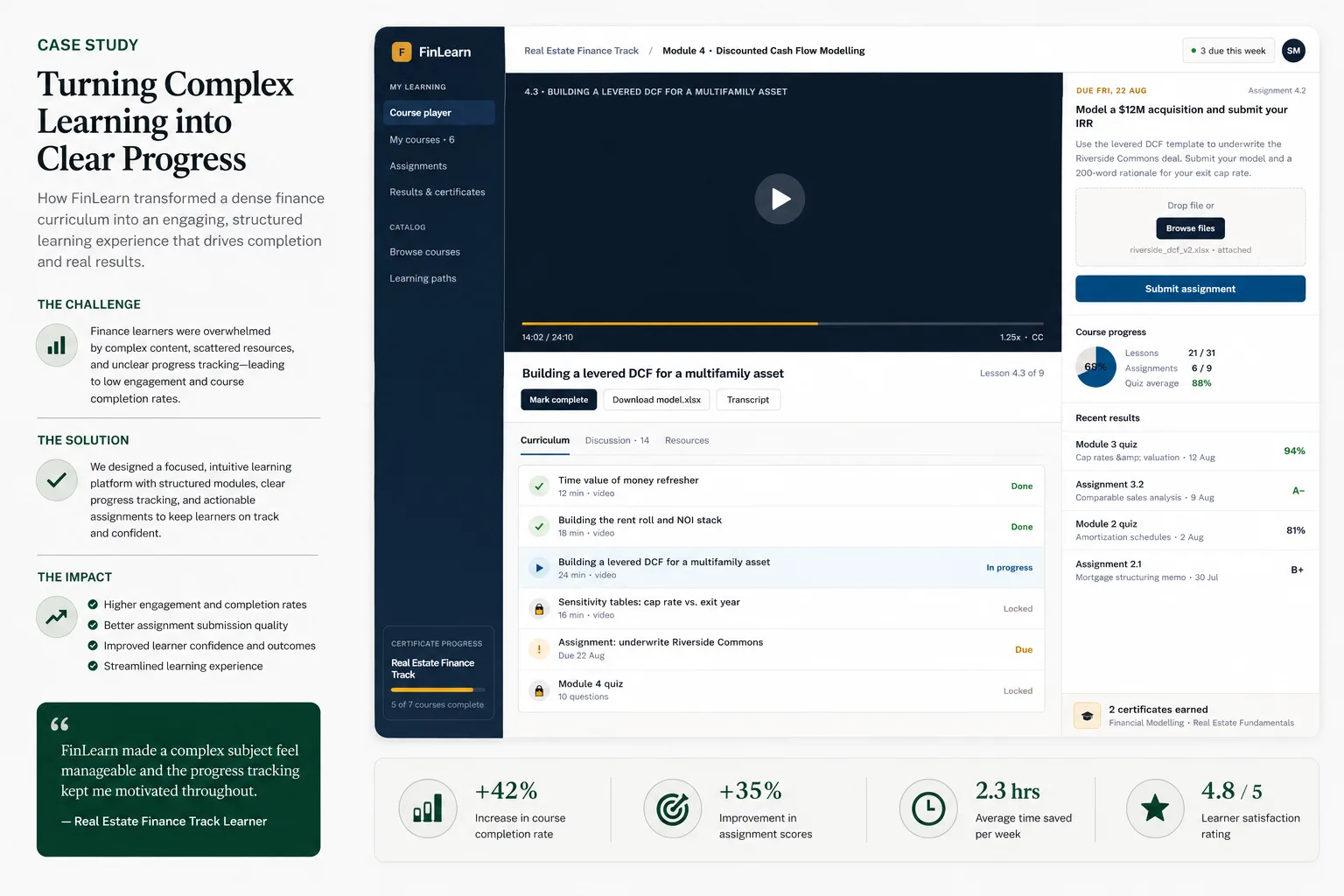 Education
Finlearn: finance & operations academy.
Admins run cohorts in a fraction of the previous effort.
React · Django · Wagtail · PostgreSQL
The problems legal teams bring to us.
Matter and case management.
Time capture, docketing, conflicts, billing, client portals. Integrated with your existing practice management, not a rip-and-replace.
Contract lifecycle management.
Authoring, negotiation, e-signature, repository, post-signature obligations. Built for legal and commercial teams working together, not on parallel tracks.
E-discovery and document review.
Ingestion, processing, review platforms, and AI-assisted first-pass review. With defensibility, audit trails, and production tooling that stands up in court.
Compliance and regulatory platforms.
Obligation libraries, policy management, horizon scanning, and the workflow tooling that turns regulatory change into actioned tasks.
What we've built for legal, more than once.
Matter management cores.
The system of record for a law firm or legal function. Built with conflicts, privilege, and ethical walls modelled properly, not bolted on.
Contract automation and CLM.
Templates, clause libraries, playbooks, approval workflows, post-signature tracking. Designed for both legal and the business stakeholders who sign off.
AI-assisted review tooling.
First-pass review, clause extraction, anomaly detection, and summarisation. With the evidence trail, confidence scoring, and reviewer QA that makes the AI defensible.
Client portals and knowledge platforms.
Matter updates, document exchange, self-service FAQs, precedent libraries. Built for the client's experience of the firm, not the firm's internal convenience.
Three ways to work with us
in legal.
Pick the shape that matches the commitment. Each model ships the same engineering standard. The difference is commercial and operating fit.
Dedicated teams
A cross-functional pod owning a workstream end-to-end.
Offshore development centre
A fully-managed engineering arm built in-region.
Staff augmentation
Senior engineers plugged straight into your team.
AI in legal & legaltech.
Contract review that flags clauses against your playbook, extraction of key terms into matter systems, and research over your own precedents with citations a lawyer can check.
Explore AI development“Enigmatix Global did some great work for Sainsbury's, bridging complex interactions between some older less flexible systems, some rigid vendor solutions and the new systems we were building. The software Enigmatix Global developers wrote stood up well, long beyond the interim scope of it needing to work for 12 to 18 months, and was still in active use 5 years after its creation, since it was part of mission-critical systems.”
Answers for legal & legaltech buyers.
Still wondering something? Ask an engineer
Matter and case management, client portals, document automation and assembly, contract lifecycle tooling, e-signature and approval workflows, and time and billing systems. Legal software succeeds when it removes steps from a fee-earner's day; anything that adds one gets abandoned no matter how good the feature is.
With strict matter-level access control, information-barrier support for conflicted matters, comprehensive audit trails, and data residency chosen to fit the jurisdictions in play. Privilege is a hard boundary in the data model rather than a permission setting applied afterwards.
Yes. Template and clause libraries, data-driven assembly, versioning and comparison, and approval routing. Where AI helps — extraction, summarisation, clause classification — we ship it behind review rather than in place of it, because a document generated without a checkable trail is not usable in legal practice.
We staff Legal & LegalTech engagements with engineers and delivery leads who've shipped in the sector before, backed by patterns proven across 5,000+ projects. The domain literacy is learned on the ground, not looked up.
We work to privilege rules, ethical-walls requirements, defensibility standards, and data-retention law. Every engagement starts with a compliance review so there's no ambiguity about which regimes apply. Every release ships with the audit trail your compliance team needs.
Yes. Most of our engagements connect to practice management (Clio, iManage), e-signature, e-discovery platforms, and billing systems. We adopt your existing integration patterns rather than imposing a new one, and we write data contracts before we write integration code.
We design for audit-trail-first design, privilege-aware access control, and court-defensible outputs from day one, not as a post-launch afterthought. Performance budgets, SLO commitments, and ops runbooks are written into the statement of work.
Either. Legal & LegalTech engagements run under all three of our engagement models. Dedicated teams, offshore development centres, or embedded staff augmentation. We pick the shape that matches your operating model, not our preferred one.
Discovery typically runs two to four weeks from first call to signed statement of work. First-engineer start dates follow within another week or two. The exact timeline depends on the shape and on the clearance or onboarding your environment requires.
Let's build from here.
Thirty minutes with an engineer who builds. No sales, no drip campaign. If we're the wrong fit we'll tell you and point you somewhere better.